The Case of Qianzhou
Nothing remains of the original Qianzhou (乾州). Located south of Jishou (吉首) in western Hunan province (湘西), Qianzhou used to be an military outpost and command centre in an ethnic region where the Miao people had to be tamed and integrated into the empire. Founded during the Song dynasty in 1070, walls were built during the middle of the Ming dynasty in 1514. By the Qing dynasty it was a small stone fortress where Confucianism prevailed.
Qianzhou was implanted near the territory of the Miao where, since the Yuan dynasty a system of indirect rule known as tusi had been implemented. Local Miao rulers could govern their own people. Everything changed during the Qing dynasty when the emperor decided to abandoned the system of local rulers and replace it by Han government officials appointed by the imperial court.
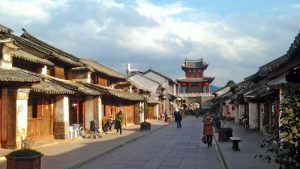
I did not know exactly what to expect when I set my mind to visit Qianzhou. At that time, I had seen Qianyang (黔阳) an intact and well-preserved ancient town that has not yet succumbed to the commercialisation and ‘Disneylandification Online Poker‘ that I saw in Fenghuang (凤凰). Yet, I did not expect to have the witness of an important part of China’s military history like Qianzhou to have been physically erased and replaced by shiny new town, too new to be look old.