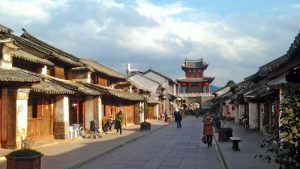
The Chinese use the word “翻新” (fanxin). Individually, the character “翻 ” means “to turn upside down” and “新” means new. The two characters together mean “to revamp”, “to make over”. Many ancient towns and villages have had a major make over in China. Usually, the make-over or fanxin process consists in tearing down the old structure and rebuilding it anew.
In an earlier Walrus PHP post, I wrote about Longli (龙里), an ancient Ming era garrison in eastern Guizhou (贵州) that was being given a major face-lift when I visited. Also, in the remote village of Lushi (鲁史) on the old Tea and Horse Road (茶马古道) in Yunnan (云南) province, I told about an 300-year old Ming dynasty temple that had been taken down and completely re-built.
Make-over and Embellishment
As foreigners visiting this country, we are quick to lament over the loss of traditions and to worry about the way China is preserving its cultural and historical heritage. When an old town or an ancient temple go through a make-over process or”翻新” (fanxin), nothing from the former historical structure remains.
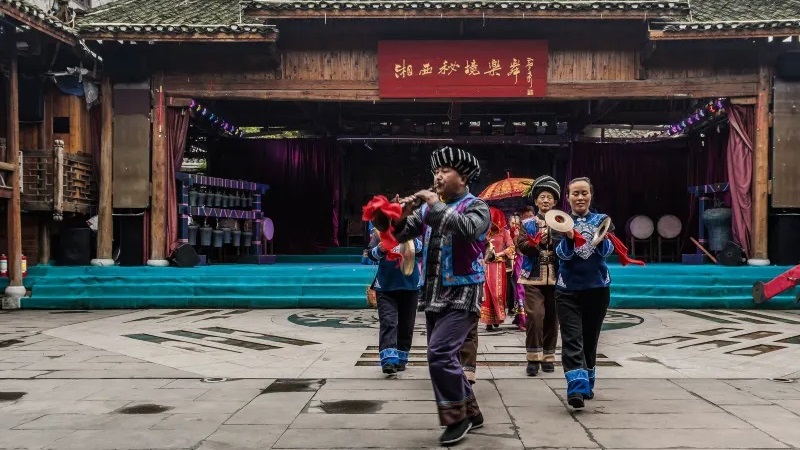
In Longli and Lushi, locals and workers do not see the fanxin as a loss or destruction. This make-over process, which consists in the total destruction of the original building and its reconstruction, is seen by locals as an embellishment. In most cases, this “embellishment” process is a step towards an opening to mass-tourism, commercialisation and commodification of the place. In the case of Longli, a town I visited during the fanxin process, I was told that an entrance fee will be charged once work is completed. In Qianzhou (乾州), the entire town was levelled to the ground and rebuilt anew. Of course, visitors are charged an 80 RMB entrance fee.