Earlier this summer, I decided to leave China’s southwest and travelled north beyond the Yangze (长江) and the Yellow River (黄河) to Shanxi (山西) province. Do make a distinction between Shanxi (山西) and Shaanxi (陕西).
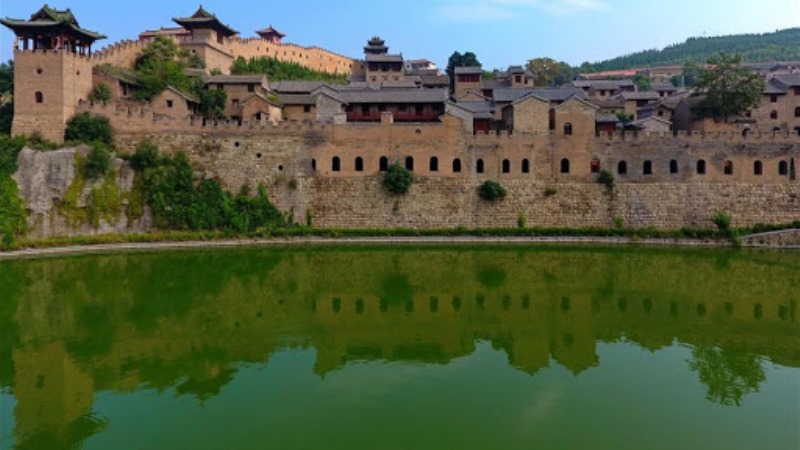
Shaanxi (transliterated with two ‘a’) is home to Xi’an and the famous terracotta army, while Shanxi (with only one ‘a’) is famous for the Buddhist grottoes of Yungang (云冈石窟) in Datong (大同), the ancient walled town of Pingyao (平遥). The southern part of Shanxi remains unknown to foreign travellers, yet the region of the Qinhe River (沁河) basin concentrates most of China’s civilian castles, most of which were built during the Ming dynasty (1368-1644).
In a previous post, I wrote about the well-preserved but almost deserted Xiangyu castle (相峪堡). Today, we are exploring what remains of Douzhuang castle (窦庄堡) where most of the ancient walls have been recently destroyed.
Read: